NCLEX Dosage Calculation Formulas & 12 Worked Problems
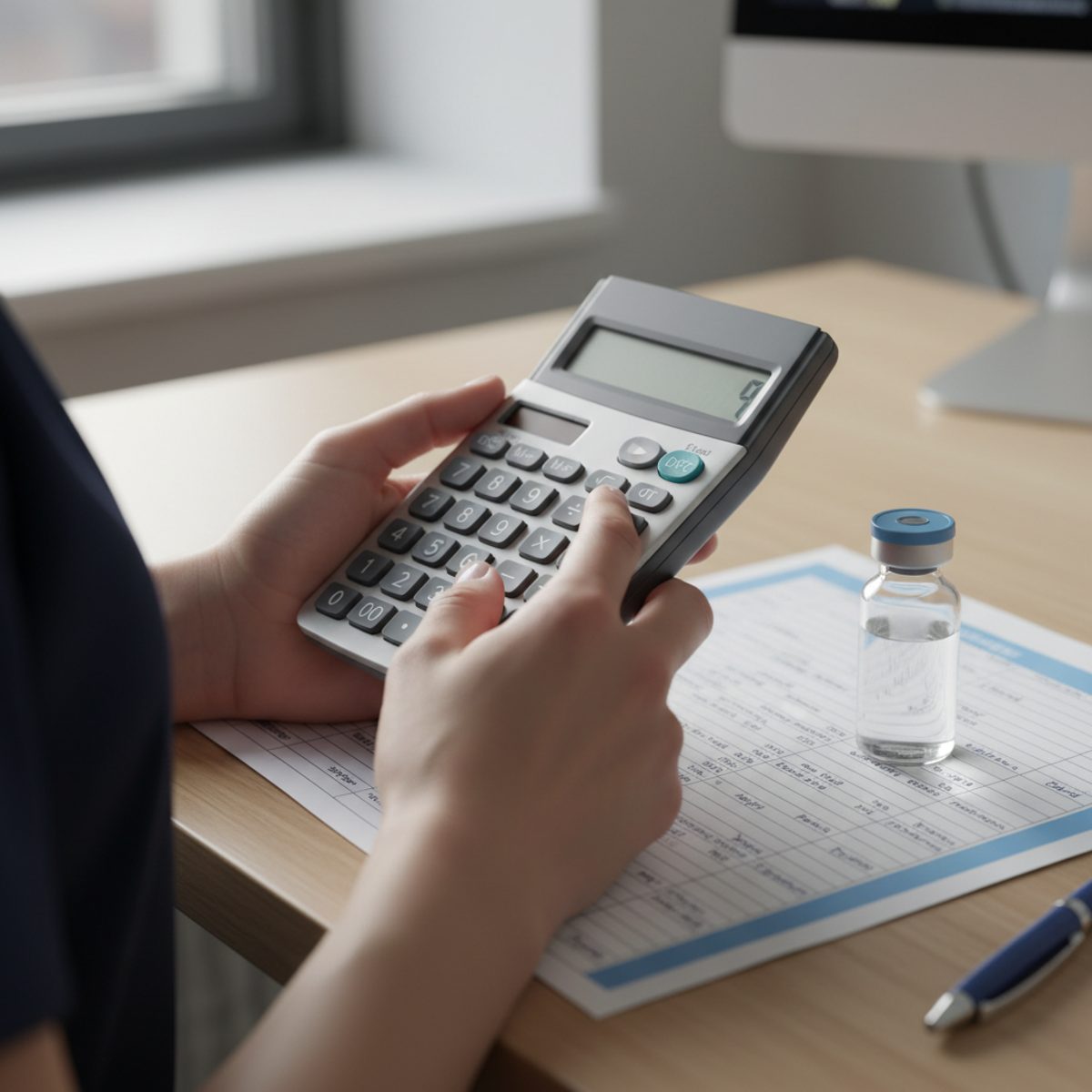
Mastering dosage calculation NCLEX questions is about more than just passing a test; it is about ensuring patient safety at the bedside. In your nursing career, a decimal point in the wrong place can be the difference between a therapeutic response and a sentinel event. You will encounter these math questions throughout your exam, often as fill-in-the-blank items where there is no room for guesswork. To succeed, you must become fluent in the 'Desired Over Have' formula and understand how to convert units like micrograms to milligrams or pounds to kilograms without hesitation. By focusing on consistency and double-checking your logic, you can turn these intimidating math problems into easy points on your exam dashboard.
The Foundation: Desired Over Have
When you sit down for your exam, the 'Desired Over Have' formula will be your best friend. It is the most reliable way to approach simple tablet or liquid medication problems. The formula is (Desired / Have) × Quantity = Amount to Give. For example, if you are caring for a patient with a post-op heart rate of 110 bpm and the provider orders Digoxin 0.25 mg PO, but your pharmacy supplies 0.125 mg tablets, your calculation is (0.25 / 0.125) × 1 tablet = 2 tablets. Always ensure your units match before you divide. If your order is in grams and your supply is in milligrams, you must convert first to avoid a massive 1,000-fold error.
Mastering IV Flow Rates and Infusion Time
IV therapy is a high-stakes area for dosage calculation NCLEX questions. You need to know two main types of problems: mL/hr for pumps and gtt/min for gravity tubing. If a patient with severe dehydration requires 1,000 mL of Normal Saline over 8 hours, your pump setting is simple: 1,000 mL / 8 hr = 125 mL/hr. However, if you are in a disaster relief setting using gravity tubing with a drop factor of 15 gtt/mL, the formula is (Volume in mL × Drop Factor) / Time in Minutes. For this same patient, that would be (1,000 × 15) / 480 minutes = 31.25, rounded to 31 gtt/min. Keep your eyes on the units.
Pediatric Weight-Based Math
In pediatrics, every milligram counts because a child's physiology is much less forgiving than an adult's. You will almost certainly face a weight-based dosage calculation NCLEX question involving a conversion from pounds to kilograms. Remember the magic number: 2.2 lbs = 1 kg. If an 18-month-old weighing 22 lbs is prescribed Amoxicillin 40 mg/kg/day divided into two doses, you first convert the weight to 10 kg. The total daily dose is 400 mg, meaning you will administer 200 mg every 12 hours. Always double-check the 'safe range' provided in the prompt. If the calculated dose exceeds the recommended range for a child with a specific serum creatinine or age, your clinical judgment must kick in to flag the order. These problems test your ability to synthesize math with clinical safety.
Heparin Protocols and Units per Hour
Heparin is a high-alert medication that requires extreme precision. On the NCLEX, you might be asked to adjust an infusion based on a patient’s aPTT levels. Imagine your patient has a DVT and is currently receiving Heparin at 1,200 units/hr. The pharmacy sends a bag labeled 25,000 units in 250 mL of D5W. To find the current pump rate in mL/hr, you use (Desired / Have) × Volume: (1,200 / 25,000) × 250 = 12 mL/hr. If the labs return an aPTT of 35 seconds (below the therapeutic range of 60-80 seconds) and the protocol mandates an increase of 2 units/kg/hr for a 70 kg patient, you must calculate the new hourly rate: 1,200 + (2 × 70) = 1,340 units/hr. Accuracy here is vital to prevent further clotting or dangerous hemorrhage.
Critical Care: Micrograms per Kilogram per Minute
Titrating vasopressors like Dopamine or Norepinephrine is a staple of ICU nursing and advanced dosage calculation NCLEX items. These problems often require multiple conversion steps. Suppose you are caring for a patient in cardiogenic shock with a blood pressure of 82/40 mmHg. The provider orders Dopamine at 5 mcg/kg/min. The patient weighs 80 kg, and the IV bag contains 400 mg of Dopamine in 250 mL of D5W. First, find the mcg/min: 5 mcg × 80 kg = 400 mcg/min. Next, convert your bag to micrograms: 400 mg = 400,000 mcg. Now, find the mL/min: (400 mcg / 400,000 mcg) × 250 mL = 0.25 mL/min. Finally, convert to mL/hr: 0.25 × 60 minutes = 15 mL/hr. Breaking these multi-step problems into smaller, logical pieces prevents the 'math panic' that often leads to errors.
Reconstitution of Powdered Medications
Reconstitution problems can be tricky because labels often list multiple volumes of diluent. You must read carefully to identify the resulting concentration. For instance, a vial of Ceftriaxone might say: 'Add 2.1 mL for a concentration of 250 mg/mL, or 4.2 mL for 125 mg/mL.' If the order is for 500 mg IM, and you chose to add 2.1 mL of sterile water, your math is (500 mg / 250 mg) × 1 mL = 2 mL. Note that the volume of diluent added is not always the 'Quantity' in your formula; the final concentration per mL is what matters. Always verify the route—IM injections rarely exceed 3 mL in a single site, so if your math results in 10 mL for a gluteal injection, you've likely missed a decimal or chosen the wrong concentration.
Insulin and Sliding Scales
Diabetes management involves both fixed doses and sliding scales, often requiring you to combine two different types of insulin in one syringe (Clear before Cloudy!). For a dosage calculation NCLEX question, you might see a scenario where a patient's blood glucose is 288 mg/dL. The order states: 'Humulin R sliding scale: 150-200 = 2 units, 201-250 = 4 units, 251-300 = 6 units.' In addition, the patient gets a scheduled 10 units of NPH. You must correctly identify that the patient needs 6 units of Regular plus 10 units of NPH for a total of 16 units. While the math is simple addition, the clinical risk is high. Never forget that U-100 insulin means 100 units per 1 mL; using a TB syringe instead of an insulin syringe is a classic 'wrong way' distractor.
Rounding Rules: When to Stop and How to Finish
The most common reason students miss dosage calculation NCLEX questions isn't the math—it's the rounding. As a general rule, do not round until the very end of your calculation. For drops (gtt), you must always round to the nearest whole number because you cannot physically count a partial drop. For mL/hr on an electronic pump, you usually round to the nearest tenth (e.g., 12.5 mL/hr), unless the question specifies otherwise. If you are calculating capsules, you cannot give half a capsule; you must round to the nearest whole. However, scored tablets can be rounded to the nearest half (0.5). Paying attention to the specific instructions in the question—'Round to the nearest hundredth' versus 'Round to the whole number'—is the final hurdle to getting the answer right.
Key takeaway
Dosage calculation NCLEX proficiency comes down to two things: a solid grasp of basic formulas and relentless practice. By mastering the 'Desired Over Have' method, understanding IV flow rates, and meticulously following rounding rules, you eliminate the anxiety associated with these questions. Remember to always look at your final answer and ask, 'Does this make clinical sense?' A dose of 50 tablets is never right. Keep practicing your conversions and formulas. For more clinical breakdowns and interactive practice banks, continue your journey with NCLEXVault to build the confidence you need for test day.
Frequently asked questions
What is the most common dosage calculation formula used on the NCLEX?
The most universal formula is the 'Desired Over Have' method: (Desired Dose / Dose on Hand) × Quantity = Amount to Administer. This works for tablets, liquids, and basic IV boluses. For example, if you need 500 mg (Desired) and have 250 mg per tablet (Have), you do 500/250 = 2 tablets. Always ensure your units of measurement (mg, mcg, g) are identical before you perform the division to ensure accuracy.
How do I calculate IV drip rates (gtt/min)?
To calculate drops per minute, use the formula: (Total Volume in mL × Drop Factor) / Total Time in Minutes = gtt/min. The drop factor (gtt/mL) is determined by the IV tubing being used (macrodrip is usually 10, 15, or 20; microdrip is 60). If you are infusing 120 mL over 60 minutes with a 10-gtt set, the math is (120 × 10) / 60 = 20 gtt/min. Round your final answer to the nearest whole drop.
Should I round my answers during the calculation steps?
No, you should avoid rounding until you reach your final answer. Rounding prematurely at each step can lead to 'rounding error,' where your final result is slightly off from the accepted answer. For example, if you are converting pounds to kilograms, keep the full decimal until the very end. On the NCLEX, follow the specific rounding instructions provided in the question, such as 'round to the nearest tenth.'
How do you convert micrograms to milligrams quickly?
To convert micrograms (mcg) to milligrams (mg), you divide by 1,000 or move the decimal point three places to the left. For example, 500 mcg becomes 0.5 mg. Conversely, to go from mg to mcg, multiply by 1,000 or move the decimal three places to the right. Remembering 'King Henry Died By Drinking Chocolate Milk' (Kilo, Hecto, Deka, Base, Deci, Centi, Milli) can help, but in nursing, the jump between Milli and Micro is the most frequent.
What is the formula for weight-based medication dosing?
Weight-based dosing typically follows these steps: 1) Convert weight from pounds to kilograms (lbs / 2.2 = kg). 2) Multiply the dose ordered (e.g., mg/kg) by the weight in kg to find the total dose. 3) If the dose is 'per day' but divided (e.g., BID), divide the total daily dose by the number of administrations. If a 44 lb child is ordered 5 mg/kg, they need 100 mg total (44/2.2 = 20kg; 20kg × 5mg = 100mg).